

















0%
loading
Tell Us What You’re
Researching
Drop a few lines about the model, agent, or program you’re working on and where you’re blocked. We’ll respond with a proposed research mission, timelines, and a clear first step.
Tell us about your project, a bit of context will allow us to connect you to the right team faster:
Thanks, we’ll get back to you within 24 hours
Oops! Something went wrong while submitting the form.
Please see our Privacy Policy regarding how we will handle this information.
Tell Us What You’re
Working On
Drop your details below — we’ll review your message and get back fast with ideas, timelines, and next steps.
Tell us about your project, a bit of context will allow us to connect you to the right team faster:
Thanks, we’ll get back to you within 24 hours
Oops! Something went wrong while submitting the form.
Please see our Privacy Policy regarding how we will handle this information.
Get in Touch With
Mission Ops
Send us your details and a short summary of what you need. We’ll follow up with next steps.
Brief Summary of Your Objective
Thanks, we’ll get back to you within 24 hours
Oops! Something went wrong while submitting the form.
Please see our Privacy Policy regarding how we will handle this information.

There’s a future where you win. We engineer it.

The decisions that define your next decade are too complex for intuition and too consequential for guesswork. We build bespoke simulation environments around your specific decision landscape. We compute the path forward.
The decisions that define your next decade are too complex for intuition and too consequential for guesswork. We compute the path forward.
Book a Mission Brief
See Example Missions
From the battlefield to the boardroom. The best leaders can't afford to guess. So they don't. They use us. And they dominate the ones who still do.
Backed by operators and researchers from
What is RLTX?

A research lab that builds decision environments.

We model the actors.
Not archetypes. Not personas. Agents with utility functions and belief structures calibrated against how your counterparties, competitors, and regulators actually move.
We run the futures.
Thousands of scenario executions in parallel, each a complete causal trace from initial conditions to terminal state. Every plausible trajectory mapped. Every assumption exposed.
You make the call.
You see where risk concentrates, which variables move the needle, what your team hasn’t considered. Full traceability—the reasoning your board and regulator will trust.
THE STACK

The Platform

Five layers. One decision advantage.
01
Data Foundation
Data Foundation
The World, all your messy reality, unified
Unified causal graph where every entity resolves to a single canonical identity. Customers, counterparties, assets, events. One source of truth.
Time-travel native. Snapshot any state, replay any moment, fork any reality for counterfactual analysis.
Continuous ingestion from internal systems, external feeds, and unstructured sources. Always current, always queryable.
02
Operational Ontology
The Rules: how decisions actually happen here
Decision physics extracted from how choices actually get made under uncertainty. Not the org chart. Not the process doc.
Authority boundaries, information dependencies, and trigger conditions encoded as executable logic.
Top-performer patterns captured and deployable across your entire operation.
03
Behavioral Models
The Players: synthetic copies of decision-makers
Not personas. Decision-makers. Each agent carries a utility function, belief structure, and update rules that evolve on evidence.
Full network topology with influence paths, cascade mechanics, and resistance clusters mapped.
Backtested on history before deployment. If it fails on the past, it never touches the future.
04
Simulation Engine
Orchestration Engine
The Futures: run every possible tomorrow, today
Millions of agents across thousands of branches, computed in parallel.
Inject any intervention and watch the cascade unfold. Policy, market, adversary, competitive.
Full causal audit trail. Every outcome traceable, explainable, and reproducible on demand.
05
Prediction + Execution
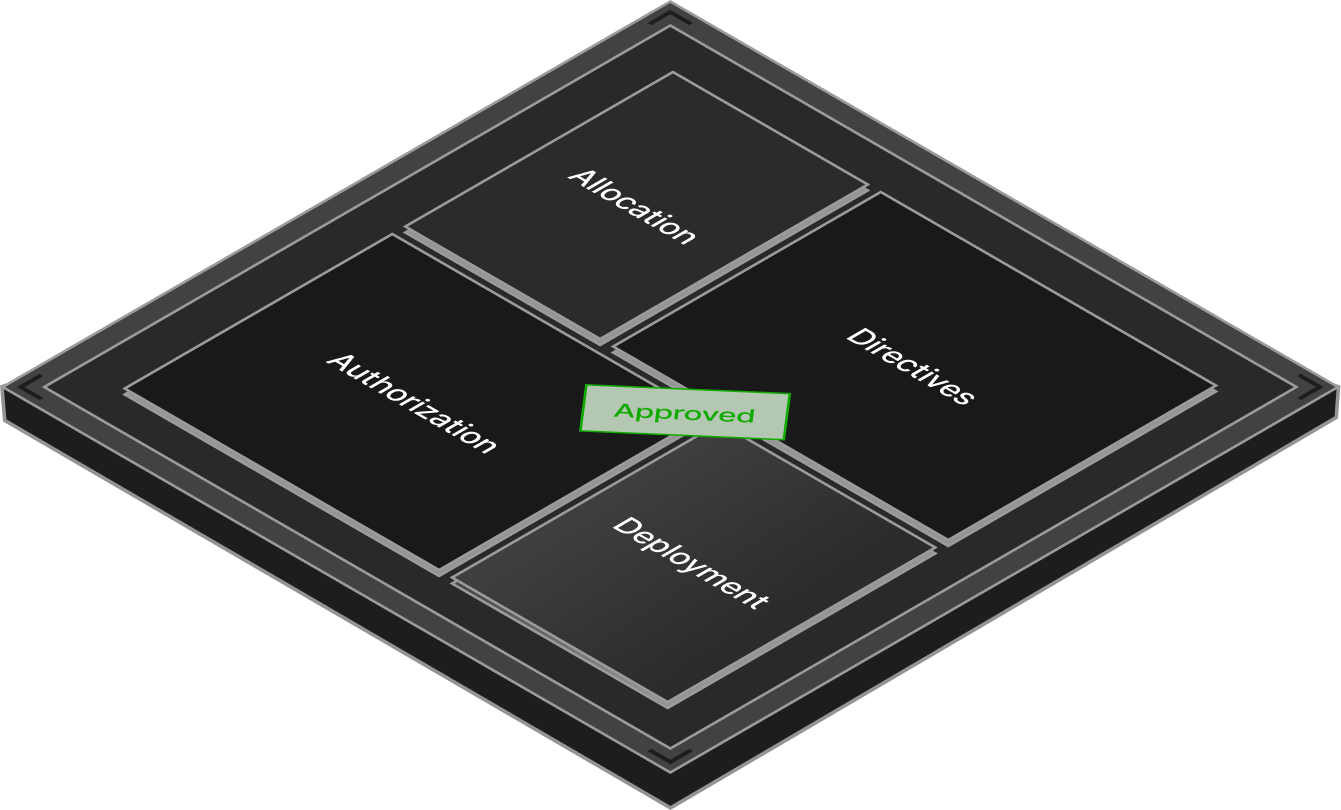
The Move: pick the path, make it real
Probability-weighted outcomes across every branch, with sensitivity analysis on the variables that actually move the needle.
Optimal path extraction with full explainability. Logic your board will trust. Reasoning your regulator will accept.
Closed-loop learning. Every real-world outcome trains the model. It compounds daily. The longer you run it, the harder it is to catch.
Research, Not Scale

AI is leaving the lab and hitting critical systems

1.
Your intelligence lives in dozens of disconnected collection systems
2.
AI fails because it's trained on stale snapshots, not live context
3.
What one analyst discovers never reaches the next mission
4.
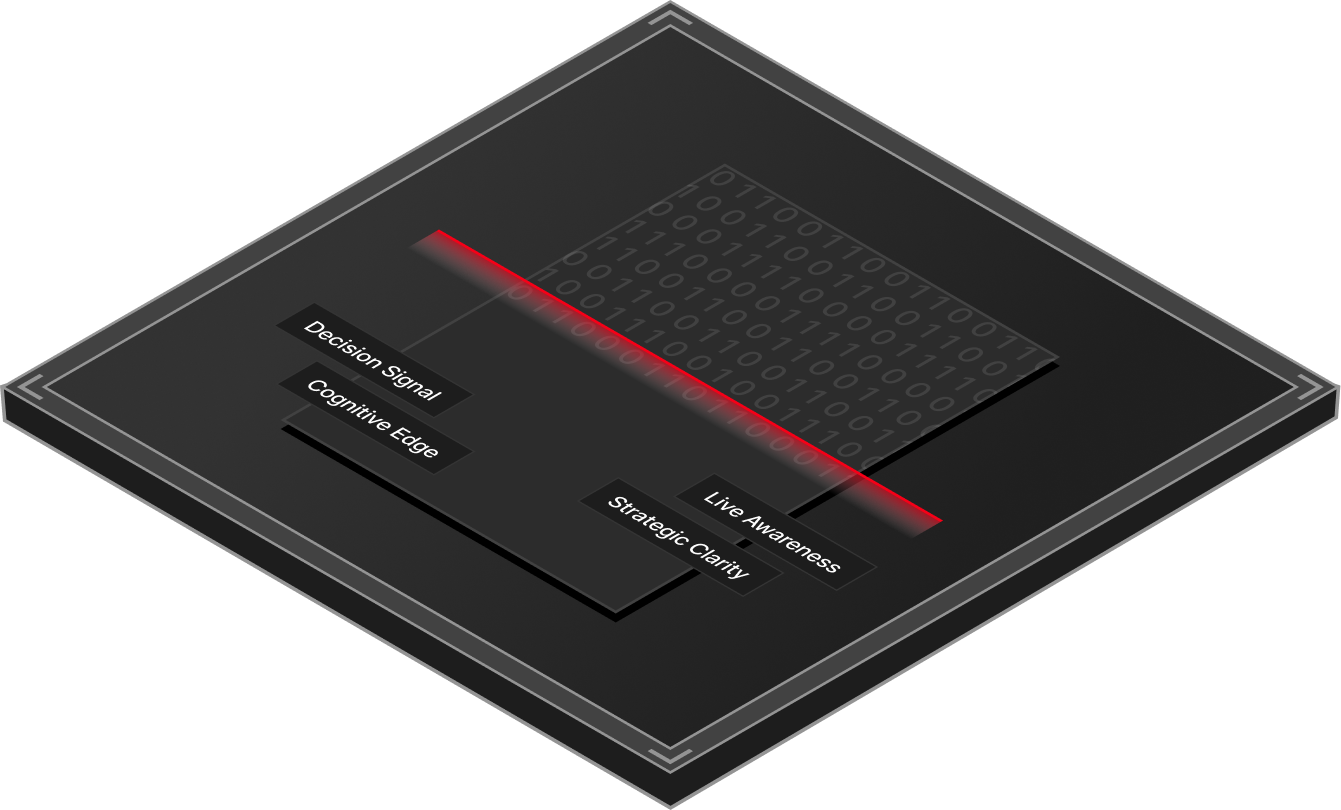
No one owns the layer that fuses data into a real-time operational picture
World-class teams don't hope it works. They call us. We build the systems and run the missions that prove it.
Products

Intelligence Products

All products powered by the same core simulation engine: multi-agent architecture scaling from thousands to millions of autonomous agents, each with unique behavioural profiles, decision-making logic, and social network connections.
AI War Rehearsal for Real Missions

FORESIGHT - Defense & National Security

Population-scale simulation for commanders, planners, and intelligence analysts. Spawns thousands to millions of autonomous AI agents—each with unique behavioural profiles, decision-making logic, and social connections.

The Engine

Generates synthetic populations from thousands to millions of agents with demographic attributes, psychological profiles, social network positions, and behavioural tendencies. Agents interact, influence each other, and respond to stimuli mirroring actual human populations.

Wargaming

  • AI adversary commanders with doctrine-realistic decision-making (Chinese, Russian, Iranian playbooks)
  • Run 1,000+ scenario branches in hours instead of weeks
  • Monte Carlo your battle plans before committing forces
  • Replace expensive human red teams with 24/7 AI opponents

PSYOP / Information Warfare

  • Simulate foreign population response to messaging campaigns
  • Test 100 message variants against synthetic populations in hours
  • Model information spread through social networks—who shares, who amplifies, who resists
  • Predict effectiveness by demographic segment, region, and cultural context

Intelligence Analysis

  • "What if" analysis on population response to sanctions, coups, natural disasters, regime change
  • Model adversary leader decision-making under pressure
  • Quantify confidence intervals—move from qualitative to probabilistic assessments
  • Feed outputs into Palantir Gotham for data-driven intelligence products
  • Predict cascade effects: "If we do X, then they do Y, then the population does Z"
Buyers: CDAO, Army Futures Command, Air Force Wargaming Institute, SOCOM, CIA, DIA, Combatant Commands
Synthetic Research at Enterprise Scale

VERITAS — Enterprise Research

Replaces six months of fieldwork with six hours of simulation. For Fortune 500 brands, consulting firms, and research agencies. Traditional research is slow (6+ months), expensive ($500K+), and biased. Veritas changes that.

The Veritas Difference

  • Simulate any audience: thousands of affluent investors, tens of thousands of healthcare
  • decision-makers, millions of consumers across 30 markets90%+ correlation to real survey data (validated methodology)
  • Results in hours, not months
  • No sampling bias. No self-reporting distortion. No recruitment logistics.
  • Traceable decision logic—see WHY synthetic respondents chose what they chose

Use Cases

  • Brand tracking without the lag
  • Concept testing at speed and scale
  • Market entry analysis across geographies
  • Competitive positioning research
  • M&A; due diligence on customer basesPrice sensitivity modeling
Buyers: CDAO, Army Futures Command, Air Force Wargaming Institute, SOCOM, CIA, DIA, Combatant Commands
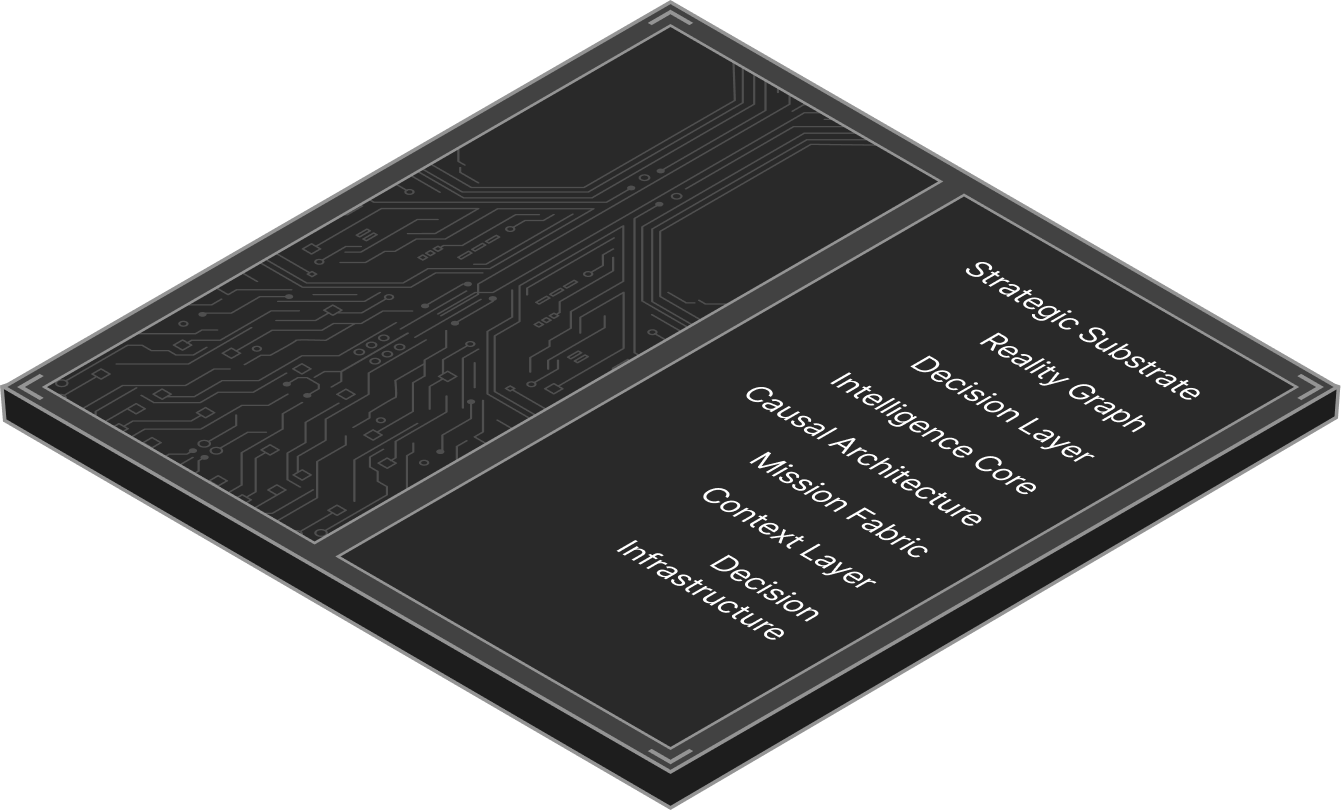
The Platform

Simulation Environments

Six layer from raw reality to computed futures.
01.
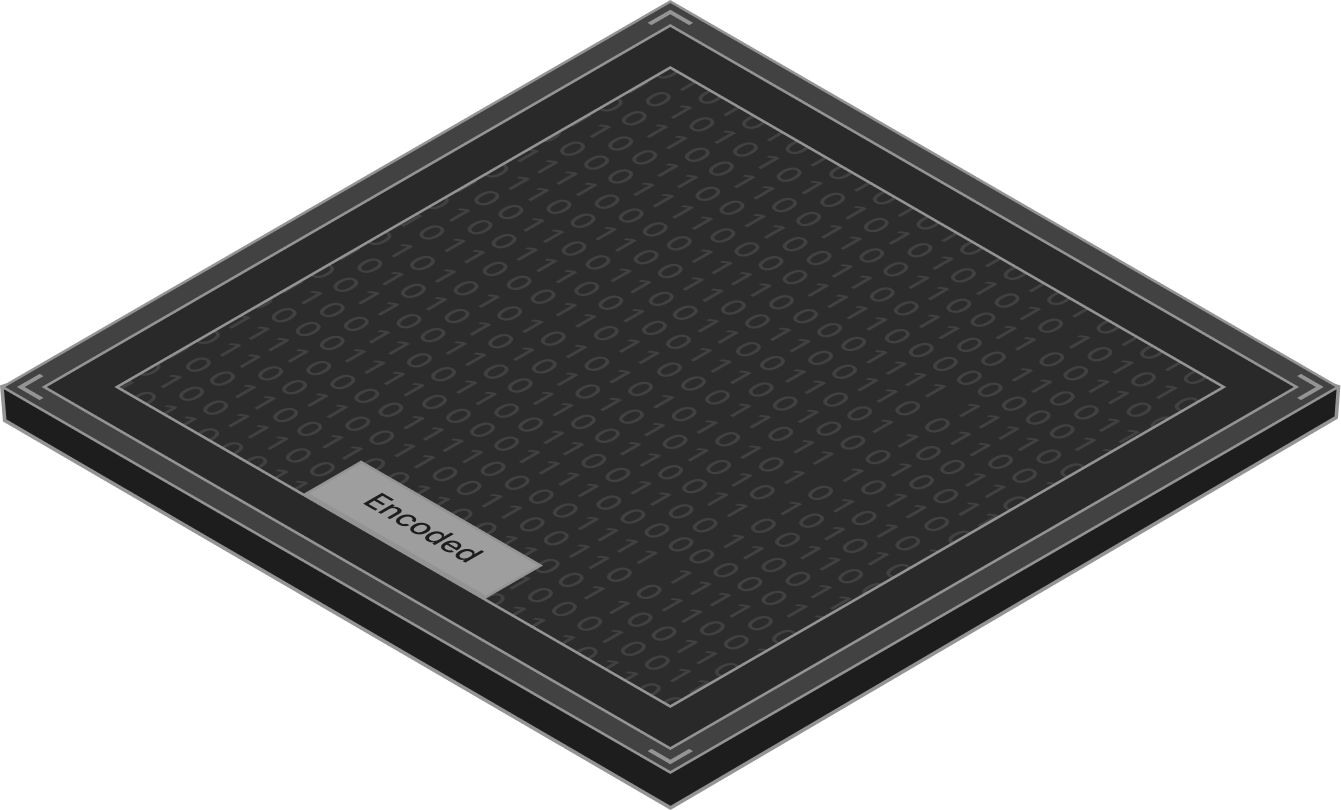
The World
Your operational reality — ingested, unified, and continuously refreshed.
02.
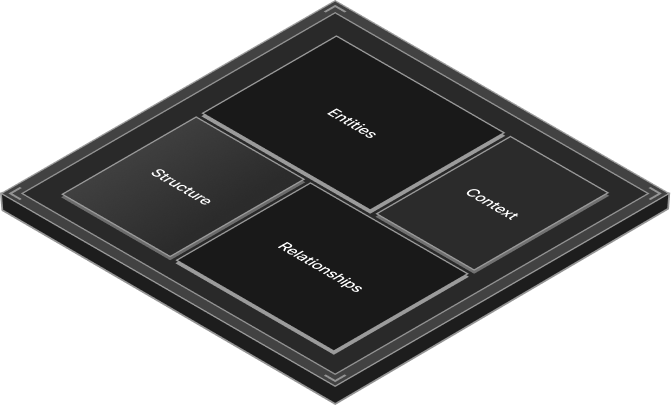
The Structure
Entities, relationships, and rules rendered as a living knowledge graph.
03.
The Agents
Every actor modeled with incentives, constraints, and strategic behavior.
04.
The Engine
Thousands of parallel futures, computed in seconds.
05.
The Scenarios
Intervene, stress-test, and compare every decision path.
06.
The Intelligence
Probability-weighted outcomes that tell you what to do and why.
WHO WE WORK WITH

We take a small number of engagements at a time. Each one gets a purpose-built environment, a dedicated research team, and the full weight of the lab behind it. We don't scale by adding customers. We scale by making each environment more powerful.

The organizations we work with share one characteristic: they face decisions where the cost of being wrong is measured in billions, careers, or lives, and no existing tool models the full decision landscape they're operating in.

HOW IT WORKS

You Explain It.
We Build It.

Decision Infrastructure
You receive the outcome distributions, the causal maps, and the simulation environment itself. Most engagements become ongoing programs. The environment evolves with new data. It compounds over time.
Scoping
You describe the problems. We map the environment around it: who's in it, what they want, how they move, what they know. You get back a simulation architecture before we write a line of code.
Construction
A dedicated team of elite researchers, engineers, and domain specialists builds the environment around your specific problem. This isn't a template. Every environment is purpose-built.
Execution
We run it. Thousands of Monte Carlo executions across every plausible scenario branch. We iterate on the model and pressure-test assumptions until the distribution of outcomes stabilizes.
Decision Infrastructure
You receive the outcome distributions, the causal maps, and the simulation environment itself. Most engagements become ongoing programs. The environment evolves with new data. It compounds over time.

Why bespoke environments instead of a platform?

Decisions don’t generalize. A $400M carve-out and a $900M platform acquisition involve different actors, incentives, asymmetries, and constraints. A simulation built for one fails for the other.

Generic platforms go shallow, relying on default assumptions that may work for consumer research but not for bid strategy, force deployment, or regulatory action. We go deep by modeling your specific actors, landscape, counterparties, and constraints, making outputs actionable where real decisions are made.

Each engagement compounds, adding domain knowledge and calibration data and building a decision advantage that strengthens over time.

Research Missions in the Wild

Mission Types That Support
Frontier Development

Defense & Intelligence
The operation happens once. The simulation already ran it ten thousand times.
Standard wargaming produces consensus because the architecture forces it. Agents backed by the same LLM converge on the same logic, the same risk tolerance, the same escalation calculus. The literature calls this farcical harmony. Your red team thinks like your blue team, and the wargame tells you what you wanted to hear.
Our adversary agents carry doctrine-realistic decision logic. Chinese, Russian, Iranian playbooks. They don't escalate because a prompt told them to. They escalate because the operational conditions match the patterns under which those actors have historically escalated. Allied agents operate under real capability constraints, real logistics timelines, real information fog. Population agents respond to interventions the way populations actually respond: unevenly, unpredictably, and based on local trust dynamics that change as the operation unfolds. Ten thousand executions. Full causal audit trail from initial conditions to terminal state. You don't get a consensus recommendation. You get a map of which courses of action survive contact with an adversary that adapts, and which ones shatter under conditions nobody in the planning cell raised.
Read More
Close

Enterprise Intelligence
Your strategy team models the market in slides. The market moves in simultaneous, interacting decisions.
Standard wargaming produces consensus because the architecture forces it. Agents backed by the same LLM converge on the same logic, the same risk tolerance, the same escalation calculus. The literature calls this farcical harmony. Your red team thinks like your blue team, and the wargame tells you what you wanted to hear.
The problem isn't analytics. You have dashboards. The problem is that real competitive dynamics are reflexive. Every actor is responding to every other actor's moves in real time, and the second-order effects are where the actual risk and opportunity live. We model the specific competitors in your market with the pricing logic, capacity constraints, and strategic priorities they've actually demonstrated. We model your channel partners with the margin sensitivities and switching costs they actually face. We model your customers with the behavioral elasticities they've actually shown. Then we let the whole system run. What you get back isn't a forecast. It's the competitive response surface: which moves open space, which ones trigger retaliation, and which ones look good in isolation but collapse when the market reacts.
Read More
Close
Frontier Labs & Cloud Platforms
Ship the system. Know what breaks before it does.
Every external evaluator runs the same benchmark suites and hands you a scorecard. You've seen four of them this quarter. They all say slightly different things. None of them test what actually matters: how your model behaves when a healthcare provider asks it to interpret a lab result while referencing a state-specific formulary restriction that contradicts the clinical guideline it was fine-tuned on.
The failures that cost you your license are intersectional. They live at the collision of domain knowledge, regulatory constraint, user intent, and context your eval team didn't think to construct because it requires expertise in the deployment domain, not just in ML. We build adversarial and naturalistic scenario environments specific to the domain you're shipping into. Not generic red-teaming. Scenarios designed by people who understand how a claims adjuster actually uses the tool, how a compliance officer will probe it, what a patient will ask at 2am that your safety team never anticipated. When something breaks, you get the full causal chain: which input triggered which reasoning path triggered which failure, so your engineers fix the root cause instead of adding another guardrail that breaks something else.
Read More
Close
Finance & Capital
Run the deal before you make the deal.
The hardest part of a competitive auction isn't valuation. It's the game theory. What will Bidder C do if you go aggressive in Round 2? Will the seller's advisor use your term sheet as leverage to pull a better offer from the strategic? Which regulatory pathway actually kills this timeline, and does the other side know it?
Your DCF handles the math. Nothing in your current stack handles the other bidders. We model the specific counterparties in your specific auction. Not generic "PE buyer" archetypes. The actual firms you're bidding against, with the fund vintage pressure, sector thesis, and return hurdles that shape how they'll actually bid. The management team you're negotiating with, with the incentive structures and information advantages they actually hold. The regulators, with the jurisdictional timelines and precedent patterns that actually govern approval. Thousands of Monte Carlo executions of the full deal dynamics. You see where the winner's curse hides, which deal terms actually change counterparty behavior versus which ones just feel like concessions, and what this deal looks like in the 15% of scenarios your diligence team hasn't considered. On a $400M transaction, that blind spot costs $60M to $100M.
Read More
Close
Governance & Public Sector
Test the policy before it touches the population.
You're redesigning a benefits program that touches 4 million households. Your policy team modeled the fiscal impact. Treasury scored it. Nobody modeled what happens when the population actually encounters the new rules: who drops out, who games the transition, which communities lose access because of an eligibility threshold that looked clean on paper.
Populations don't respond to policy the way policy assumes they will. They respond based on local trust in institutions, prior experience with government programs, information access that varies by zip code, and social influence patterns that no demographic model captures. We build the population. Not a statistical sample. A behavioral one. Agents that make enrollment decisions the way real households make enrollment decisions: imperfectly, based on incomplete information, influenced by neighbors and community organizations, constrained by transportation and childcare and the dozen other things that policy design treats as externalities. Run the rollout a thousand times. See which implementation pathways achieve uptake and which ones create deserts. See which eligibility thresholds trigger adverse selection and which ones are robust. See what happens before it happens to real people.
Read More
Close
Energy & Critical Infrastructure
The grid doesn't get a second chance.
The 2021 Texas freeze. The 2003 Northeast blackout. Every post-mortem says the same thing: the failure cascaded across systems that were never stress-tested together. The gas network failed, which starved the power plants, which collapsed the grid, which killed the gas compressors. Each system passed its own reliability test. The interaction between them is what broke.
We model the coupled system. Not the grid in isolation. Not the gas network in isolation. The actual interdependency structure where a transmission constraint in one region changes dispatch economics in another, where a cyber intrusion at a substation triggers a protection relay sequence that cascades into a generation shortfall, where a new renewable interconnection changes the voltage stability dynamics across an entire balancing authority. We run the scenarios your contingency planning hasn't combined yet: simultaneous extreme weather and cyber event. Pipeline disruption during peak demand with reduced generation capacity. Regulatory change that alters dispatch priority during a supply shock. Each execution traces the full cascade path so your operators see exactly where intervention stops the propagation and where it's already too late.
Read More
Close
Industrial & Manufacturing
Your floor doesn't fail in isolation. It fails in sequence.
The bearing on Line 3 doesn't just take down Line 3. It forces rerouting to Line 1, which was already running above rated throughput to cover a supplier delay on a critical subassembly. Now you've got a quality excursion on your highest-margin product and a customer delivery commitment you're about to miss. Your maintenance system saw the bearing. Nobody saw the sequence.
We model your specific production topology. Not a generic factory digital twin. Your equipment, with the degradation signatures your specific machines have actually shown. Your suppliers, with the lead time variability and capacity constraints they've actually exhibited. Your production schedule, with the interdependencies between lines that create the hidden coupling your MES doesn't represent. We run operational scenarios that test decisions before they hit the floor: what happens if you defer that maintenance window, shift that production run, single-source that component, accept that order with the compressed timeline. You see which decisions contain their consequences and which ones cascade. The operations team that runs this before every major scheduling decision stops learning lessons at seven figures an hour and starts seeing them in advance.
Read More
Close
Health & Civil Systems
A failed Phase III costs a billion dollars and three years you don't get back.
Most of that risk comes from a single assumption: that the population in your trial will behave like the population in your model. It won't. Adherence drops in subpopulations your enrollment criteria didn't stratify for. Providers adopt at rates that depend on local formulary dynamics your market access team hasn't mapped. Payers respond to your pricing based on competitive intelligence you don't have.
We model the patient journey the way it actually unfolds. Not the idealized clinical pathway. The real one, where a 62-year-old with two comorbidities and a $4,000 deductible makes adherence decisions based on out-of-pocket cost, not clinical benefit. Where a community oncologist's prescribing behavior is shaped more by the last rep visit and the local tumor board than by the Phase III data. Where a PBM's formulary decision creates an access barrier that doesn't show up in your national market share numbers but destroys uptake in the Southeast. We run the launch. Thousands of times. Across every realistic combination of pricing, access, provider behavior, and patient response. You see which launch sequencing achieves uptake and which ones stall. Which pricing thresholds trigger payer pushback that cascades into formulary exclusion. Which patient segments you're losing and exactly why, before you've committed the commercial spend.
Read More
Close
Land & Natural Resource Capital
Thousands of parcels. Dozens of jurisdictions. One bad acquisition destroys the vintage.
The due diligence on a 30,000-acre portfolio looks clean until corn subsidies shift, the county rezones 6,000 acres for solar, water rights litigation in the adjacent basin changes your irrigation economics, and the institutional buyer you were planning to exit to just closed a competing portfolio at a lower basis.
We model the specific assets in your portfolio and the specific dynamics that determine their value. Not commodity price sensitivity in the abstract. The actual interaction between your water rights and the regulatory trajectory in your specific basin. The actual interaction between your crop mix, your soil profile, your climate exposure, and the subsidy regime that could shift after the next farm bill. The actual behavior of the three institutional buyers most likely to be on the other side of your exit. We run the portfolio forward across thousands of scenario branches where commodity, policy, climate, and counterparty dynamics all move simultaneously. You see which acquisitions are robust across the full distribution of futures and which ones are only profitable in the scenario your IC deck assumes. You see where concentration risk actually lives, not at the asset level, but at the variable level, in the hidden correlations between parcels that look diversified but break together.
Read More
Close
Leading Frontier Labs & Cloud Platforms
A frontier lab is 8 weeks away from shipping a new agent system that writes and ships code. Internal eval and safety teams are overloaded. They have internal contractors, but no one owning the whole mission.

Scaling Safety Infrastructure for Autonomous Systems


You’re close to shipping an autonomous agent operating across regulated domains.

The safety methodology is solid. The challenge is execution at scale.

Evaluating real-world risk across finance, healthcare, and legal contexts requires deep domain expertise, fast coordination, and rigorous synthesis. Scaling that internally takes time most teams don’t have.

What we do

We execute your safety methodology at scale.

You define the threat models and thresholds. We run the evaluation.

We rapidly deploy vetted domain specialists including regulatory reviewers, compliance officers, legal experts, and adversarial ML researchers to stress-test agents in production-like environments. Findings are structured, prioritized, and mapped directly to your risk framework.

The outcome

Your safety team stays focused on decisions, not logistics.

Risks are identified early, guardrails are strengthened, and launches stay on schedule.

The infrastructure we build continues to support monitoring and future releases.

Leading Frontier Labs & Cloud Platforms
A frontier lab is 8 weeks away from shipping a new agent system that writes and ships code. Internal eval and safety teams are overloaded. They have internal contractors...
Read more
DoD and Defense Companies
A Ministry of Defense wants to choose between models from Lab A, Lab B, and Lab C for a sensitive intel/ops program. Each lab has their own evals and vendors but the ministry needs a neutral, apples‑to‑apples test range and report.

Decision Advantage Through Unified Intelligence

Analysts often encounter the same adversary unit under multiple identifiers across SIGINT, IMINT, HUMINT, and geospatial systems. Correlating these manually takes time. By the time the picture is unified, the situation has already changed.

The issue is not failing systems. It is fragmented data. AI cannot reason effectively when intelligence remains siloed and inconsistently labeled.

What we build

We build a unified intelligence layer that resolves entities across all collection sources and maintains a continuously updated operational picture.

Identifiers are fused into canonical entities so new reporting instantly updates the full intelligence context. Temporal modeling preserves what was known at any point in time. Confidence weighting reflects source reliability and automatically updates as corroborating evidence appears.

This unified layer powers fusion engines, threat prediction, decision support, and wargaming based on real, integrated intelligence.

The outcome

Time to fusion is reduced from hours to minutes. Analysts focus on analysis instead of reconciliation. Commanders operate with current intelligence, not stale snapshots.

Decision advantage comes from tempo. When your intelligence updates faster than the adversary can decide, you operate inside their loop.

DoD and Defense Companies
A Ministry of Defense wants to choose between models from Lab A, Lab B, and Lab C for a sensitive intel/ops program. Each lab has their own evals and vendors but the ministry...
Read more
Tier-1 Banks & Financial Institutions
A global bank wants to deploy a frontier model from Lab X for customer‑facing and risk workflows. Their regulator is already nervous. The bank has data teams, the lab has their own eval suite and vendors, but no one is responsible for the joint, regulator‑grade program.

Client Intelligence at Institutional Scale

Large financial institutions often represent a single client across dozens of disconnected systems. Relationship, risk, trade, and communication data all exist, but assembling a complete client view takes time most teams do not have.

AI initiatives fail because they cannot answer a basic question reliably: who is this client. Regulatory demands for explainability and data lineage further expose the limits of fragmented architectures.

What we build

We build a client intelligence layer that unifies fragmented data into a single, usable client representation. Entity resolution connects all related records into one client identity. New trades, communications, and risk events automatically attach to the correct entity in real time.

A counterparty graph explicitly models the multiple roles a client plays across the institution, enabling accurate risk, pricing, and service decisions.

Built-in audit infrastructure traces every fact and conclusion back to source systems, supporting regulatory review by design.

The outcome

Client lookup time drops from over an hour to under a minute. Risk moves from batch processing to real-time detection. Regulatory inquiries resolve faster with clear lineage. AI systems succeed once they have a reliable foundation for client identity.

We have deployed this architecture across multiple tier-1 institutions facing the same core problem: fragmented data blocking intelligent systems.

Tier-1 Banks & Financial Institutions
A global bank wants to deploy a frontier model from Lab X for customer‑facing and risk workflows. Their regulator is already nervous. The bank has data teams, the lab has their...
Read more
Sovereign Wealth & Institutional Capital
Institutional investors spend too much time gathering scattered information instead of analyzing it. A unified intelligence layer turns fragmented data into faster, more confident investment decisions.

Investment Intelligence That Compounds

Analysts spend most of their time gathering information instead of analyzing it. When portfolio questions arise, answers are buried across systems, research, news, and internal notes. The data exists, but no single view connects it.

Funds that succeed with AI are not smarter. They have built the infrastructure that makes intelligence usable.

What we build

We build a unified investment intelligence layer that makes your entire knowledge base queryable. Holdings are connected to investment theses, assumptions, and risk factors. When new information challenges an assumption, affected positions surface automatically.

Entity resolution unifies companies across portfolio systems, research, news, and CRM. Updates anywhere enrich the full investment view. Thesis tracking and research lineage preserve why decisions were made and surface conclusions when underlying information changes.

The outcome

Analyst time shifts from gathering to analysis. Research cycles compress from weeks to days. Institutional knowledge persists instead of walking out the door.

We have deployed this architecture across multiple institutional investors facing the same challenge: scattered information limiting investment intelligence.

Sovereign Wealth & Institutional Capital
Institutional investors spend too much time gathering scattered information instead of analyzing it. A unified intelligence layer turns fragmented data into faster, more con...
Read more
Industrial Systems & Advanced Manufacturing
Manufacturers operate across fragmented systems that prevent issues from being seen early. A unified operations layer connects parts, suppliers, equipment, and quality data so downtime and defects can be predicted and prevented.

Unified Operations Across Fragmented Footprints

Large manufacturers operate across dozens of facilities and systems acquired over decades. Parts, suppliers, equipment, and maintenance data exist everywhere, but nowhere together. As a result, defects, downtime, and supply disruptions surface too late.

AI initiatives fail not because the models are wrong, but because the data they rely on is fragmented.

What we build

We build a unified operations layer that makes complex manufacturing footprints queryable as a single system.

Entity resolution connects parts, suppliers, equipment, and facilities across all systems. An operational knowledge graph links maintenance, quality, production, and supply chain data so issues can be traced across the entire operation.

The outcome

Predictive maintenance and quality programs begin working at scale. Unplanned downtime is reduced. Supply chain and quality risks surface earlier and resolve faster.

We have deployed this architecture across global manufacturers facing the same challenge: fragmented data preventing intelligent operations.

Industrial Systems & Advanced Manufacturing
Manufacturers operate across fragmented systems that prevent issues from being seen early. A unified operations layer connects parts, suppliers, equipment, and quality data...
Read more
Enterprise Platforms & AI-Native Software
Customer signals are scattered across systems, making churn visible only when it is too late. A unified customer intelligence layer connects behavior, usage, and sentiment so teams can act early and retain revenue.

Customer Intelligence That Compounds

Customer data lives across dozens of systems. Signals that predict churn exist, but they are scattered. By the time patterns are visible, the customer has already decided to leave.

Retention suffers not because teams lack insight, but because insight is fragmented.

What we build

We build a unified customer intelligence layer that connects every system into a real-time understanding of each customer.

Entity resolution unifies customer identity across analytics, support, CRM, billing, and success platforms. A relationship graph connects usage, support, contracts, sentiment, and renewal history into one coherent view. Behavioral signals are combined into predictive health scoring that improves as outcomes are observed.

The outcome

Teams identify churn risk earlier, save more renewals, and uncover expansion opportunities that were previously missed.

Customer intelligence compounds over time as every interaction strengthens prediction and context.

We have deployed this architecture across SaaS and platform companies facing the same challenge: fragmented data blocking proactive customer success.

Enterprise Platforms & AI-Native Software
Customer signals are scattered across systems, making churn visible only when it is too late. A unified customer intelligence layer connects behavior, usage, and sentiment so teams can act early and retain revenue.
Read more
Health Systems & Clinical AI
Fragmented patient records across EHR systems create safety risks and prevent clinical AI from working reliably. A unified patient intelligence layer resolves identities in real time so clinicians and AI systems can act on complete, trusted information.

Patient Intelligence Without Safety Compromises

Patient records are fragmented across multiple EHRs. Duplicate identities lead to missing allergies, incomplete medication histories, denied claims, and avoidable safety risks. AI systems fail when they operate on partial or inconsistent patient data.

The cost is measured not just in dollars, but in patient safety.

What we build

We build a unified patient intelligence layer that resolves patient identities with confidence scoring and delivers complete clinical context in real time.

Probabilistic entity resolution links records across systems, handling ambiguity safely and escalating when needed. A clinical graph connects encounters, diagnoses, medications, labs, and care teams into a single representation that clinical AI can trust.

The outcome

Duplicate patient records drop sharply. Clinicians see complete information at the point of care. Clinical AI performs as intended, with fewer missed cases and less alert fatigue.

We have deployed this architecture across health systems facing the same challenge: fragmented patient data undermining safety and intelligent care.

Health Systems & Clinical AI
Fragmented patient records across EHR systems create safety risks and prevent clinical AI from working reliably. A unified patient intelligence layer resolves identities in real time so clinicians and AI systems can act on complete, trusted information.
Read more
Leading Frontier Labs & Cloud Platforms
A frontier lab is 8 weeks away from shipping a new agent system that writes and ships code. Internal eval and safety teams are overloaded. They have internal contractors, but no one owning the whole mission.
READ MORE
DoD and Defense Contractors
A Ministry of Defense wants to choose between models from Lab A, Lab B, and Lab C for a sensitive intel/ops program. Each lab has their own evals and vendors but the ministry needs a neutral, apples‑to‑apples test range and report.
READ MORE
Tier-1 Banks & Financial Institutions
A global bank wants to deploy a frontier model from Lab X for customer‑facing and risk workflows. Their regulator is already nervous. The bank has data teams, the lab has their own eval suite and vendors, but no one is responsible for the joint, regulator‑grade program.
READ MORE
Sovereign Wealth & Institutional Capital
Institutional investors spend too much time gathering scattered information instead of analyzing it. A unified intelligence layer turns fragmented data into faster, more confident investment decisions.
READ MORE
Industrial Systems & Advanced Manufacturing
Manufacturers operate across fragmented systems that prevent issues from being seen early. A unified operations layer connects parts, suppliers, equipment, and quality data so downtime and defects can be predicted and prevented.
READ MORE
Enterprise Platforms & AI-Native Software
Customer signals are scattered across systems, making churn visible only when it is too late. A unified customer intelligence layer connects behavior, usage, and sentiment so teams can act early and retain revenue.
READ MORE
Health Systems &
Clinical AI
Fragmented patient records across EHR systems create safety risks and prevent clinical AI from working reliably. A unified patient intelligence layer resolves identities in real time so clinicians and AI systems can act on complete, trusted information.
READ MORE
FAQs

Everything you need to know about us

Are you just another data vendor?
How fast can you start?
Do you replace our internal team?
What do we deliver?
Why should we trust you with sensitive systems?
Questions?
We’ll get you answers fast.
talk to the team